Trekking the Great Himalayan mountain chain is not something everyone can do. However, in the recent years this wild travel destination has become a lot more accessible; not all treks require you to be a professional trekker to enjoy a memorable experience. Believe it or not, some of Himalaya’s most superb valleys and mountains are quite easy and pleasant to explore, especially in the warm season. Home to the highest mountain in the world (The Everest), Himalaya prides with a myriad of treks and camps for both novice and professionals mountaineers. Before getting started and planning the adventure of a lifetime, check out these tips to make sure you enjoy a safe and thrilling experience.
Plan the best itinerary
What do you want to see on your trip to the Himalayas? Are you hunting for remote mountain passes that very few people have dared to try, or do you want to get to know more about the region’s culture? Little Tibet and Ladakh are home to hundreds of ancient monasteries. Travelers can enjoy the most relaxing travel experience on these territories. If you also want to enjoy a trekking trip, consider exploring Sikkim, a place with luxuriant forests and exquisite scenery. It’s best to prioritize when trekking the Himalayas. Don’t aim to see it all as that would be impossible. Pick a place or a region and focus on it. Savor the campsites, the villages, the shrines, and the people and plan to see another part next year.
Settle on a budget
Even though you’ve decided to trek the Himalayas on your own, you are still advised to hire a travel guide. Only a local can point you in the right direction. Some of the best attractions and places of
interest are deeply hidden into the mountains. Local travel guides can also recommend you convenient lodging, transportation and dining places. If you’re on a budget and can’t afford expensive accommodation, you can easily choose a camping site.
Convenient trekking
Peak trekking season in the Himalayas begins in March and ends in June. But then again, you still need to be prepared as the weather conditions can change. Sikkim, Uttaranchal, and Himachal are prone to heave monsoons in July and August, so make sure to avoid these regions at all cost; and unless you’re an experienced trekker, you should also avoid the Indian Himalayas from November to March. During this time of the year, it’s best to explore Nepal where the treks are a lot more accessible even in the cold season.
Stay safe A trekking trip to Himalaya can prove to be challenging, so you are advised to stay safe. Read about acclimatization and try not to assume that a GPS will help you find your way back to the camp in case you get lost. A paper map and compass are a lot better alternatives. You should also hire a local guide because some paths are tricky and complicated to trek.
Proper equipment
Forget about fashion when trekking the Himalayas, and center all your attention on proper equipment. Make sure your backpack is heavy-duty, as well as your shoes, coat, and additional accessories for rainy weather and severe wind. If you don’t have proper gear to wear on the mountain, buy it from India. The quality is outstanding. Don’t worry, prices are incredibly convenient! Apart from clothes, you need a qualitative tent and a sleeping mat.
Trekking tips
Now that you’re all set, it’s time to get going. Grab your gear and let the adventure begin. Here are some trekking trips that might come in handy:
* Be patient & stay positive – Some treks last for two weeks, so you need to pack yourself with a lot of patience and determination. Walking for 10 hours a day can become tedious; find a way to stay positive and enjoy the journey. Keep calm, admire the scenery and don’t think about the physical pain. Remember – trekking the Himalaya is an once-in-a-lifetime opportunity!
* Protect your equipment – make sure your trekking gear is protected; use a kitbag to make sure your items don’t get ruined by jagged rocks and thorn bushes. Be careful with your camera, and try not to use in rugged areas as you don’t want a snow leopard to scare you and make it leave it behind and run for your life.
* Stay hydrated - trekking is challenging activity, and if you want to cope you must stay hydrated. Make sure your bottle is kept in a wind-proof pocket, and keep it off rain and sun.
Last but not least, don’t forget to protect the environment. Even the smallest, most insignificant actions can be disastrous to the environment, ecosystem and locals. By Peter Smith and ShaktiHimalaya.com!
Africa has been a travel destination for the rich and famous for many years now. A recent study performed by the New World Wealth dug deeper into the continent’s relationship with the super rich community. The findings emphasized that the wealthy love Africa; and that exploring its territories is not just an adventurous journey, but also an opportunity to enjoy pure luxury is several of Africa’s top tier travel spots. According to the “Millionaire Tourism in Africa” study, nearly 43,000 millionaire people visited Africa between September 2014 and September 2015. In terms of specific locations, South Africa was on top. Major destinations included Umhlanga, Cape Town, Franschoek, Johannesburg, Kruger Park, Garden Route and Stellenbosch. Why are these preferred travel location? Let’s have a closer look to see what they’re all about.
Umhlanga
Umhlanga is a well-known residential and commercial resort city located in Durban, South Africa. The perfect location, right on the coast of KwaZulu-Natal, makes this place an ideal spot for a relaxing getaway for the rich and famous. Finished in 2000, Umhlanga is famous for its astounding Gateway Theatre of Shopping, the largest shopping mall in Africa and the southern hemisphere. Pearl Dawn is included in this commercial city resort; it is the region’s tallest skyscraper (152m high). Umhlanga is also South Africa’s faster growing cities, with a population that increased from 15,000 in 2001 to 25,000 in 2011. For some more relaxation, make sure to check out the beaches as well – Main Beach and Bronze Beach.
Cape Town
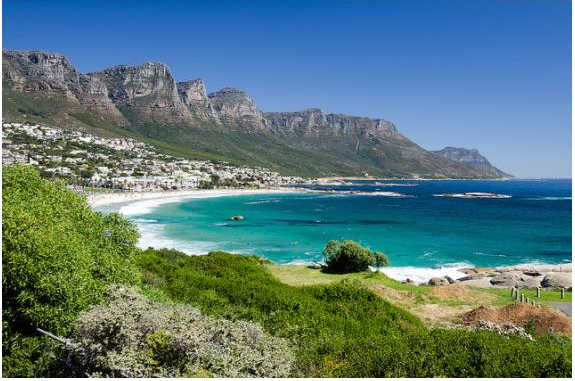
Cape Town is South Africa’s jewel. The capital city is hands-down one of the most exclusive and extravagant in the world. There’s something for everyone to do here. Go hiking on Table Mountain, explore the wildlife of Cape Point’s Nature Reserve, visit the Victoria & Alfred Museum and Robben Island, and enjoy sheer relaxation on Clifton Beach. The capital city is superb from all points of view. The avant-garde architecture, great food and luxurious hotels and resorts will surely exceed the expectations of the rich and famous.
Franschhoek
The small town of Franschhoek is positioned in the Western Cape Province of South Africa. It is one of the oldest and most beautiful in the country. Located 75 km from the main city of Cape Town, Franschhoek has a small population of nearly 15,000 people. Once a traditional country retreat, the town has gone through a notable boom in the 90s. Property prices have increased drastically ever since and right now Franschhoek is one of South Africa’s most sought after residential areas. Wealthy people can enjoy here sheer relaxation as the town hasn’t lost its conventional South African charm. Some of the country’s finest bistros and restaurants are located in Franschhoek. Many know this place as South Africa’s “food and wine” capital, with lots of bed & breakfast cottages and comfortable resorts.
Johannesburg
With a population that goes beyond 4 million people, Johannesburg is South Africa’s capital and main city centre. It is also the largest metropolis in the country with lots of interesting attractions, places of interest and activities for the world’s wealthiest travelers. Often described as the economic powerhouse of Africa, Johannesburg is home to some of the world’s tallest buildings, including Hillbrow Tower and Sentech Tower. In terms of relaxation, travelers should definitely check out the City Park & Zoo, Museum Africa, the Johannesburg Art Gallery, Market Theatre and Madela Museum among numerous others.
Garden Route
South Africa’s Garden Route is a must-see regardless of your budget. Packed with incredible vistas and plenty of natural attractions, this place will surely exceed all your expectations. Knysna in particular, is surrounded by the most soothing ancient forests and abundant wildlife. It also embraces a magnificent lagoon where sailing enthusiasts can enjoy incredibly adventures. The arty, serene setting of Knysna is an excellent travel spot for wealthy travelers hunting for some relaxation.
South Africa is an exceptional place for a summer getaway. Unlike average voyageurs mostly looking for vacation spots on a budget, the wealthy prefer luxury combined with peace and tranquility. South Africa comes with a wealth of retreats positioned far away from the main cities. This way tourists can make the most of their vacation, enjoy top-quality wine and local foods, and spend quality time with their loved ones without being bother by any sort of urban surroundings. By Peter Smith and CapePortfolios.com!
Lithuania was, until relatively recently, an almost unheard of cultural gem in Europe. It has slowly gained popularity as people realize how much it has to offer. It is the southernmost of the Baltic States and has an abundance of natural beauty and cultural delights. Every member of the family will find something to interest and delight in while exploring the rugged territories of this beautiful northern country:
The coast
One of the most amazing sights you will see in your lifetime is the thin sliver of white sand which sits on the Baltic coastline. It is known as the Curonian Spit and laps the deep blue sea as well as wet marshlands and vast green forests with lakes scattered across them.
The capital – Vilnius Vilnius is the capital city of this picturesque, independent country. There are cobbled streets everywhere, many passing by one of the numerous baroque churches, each with an ancient courtyard. Despite its origins, the city has a decidedly continental feel. Although, the general feel as you stroll through the city is of a vibrant, bustling and optimistic place. In fact, you can take a trip in a hot air balloon and see the skyline from the sky; the multitude of church spires creates the image of a bed of needles! The modern skyline also has numerous shiny skyscrapers and the gradually improving nightlife shows that this is a city and a country which is determined to survive and thrive.
Among some of the best places you can explore with your family in Vilnius, we should mention: Old Town, KGB Museum, Bernardine Gardens, Vingis Park and numerous others.
Historical reminders
Not far from this cultural gem is a disused missile site which has been turned into a museum, displaying everything to do with the Cold War. There is even a sculpture park which was created by the soviets and remains as a reminder if darker times. The city itself has reminders of these dark times. There are KGB torture cells and many reminders of the ghettos which existed in those dark days; places where the Jewish community were herded and kept before the Nazi’s killed them all.
Nemunas Delta
This is the marsh land on the East side of the Curonian lagoo. It is a remote area which has seen virtually no tourism. The summer sun illuminates the white sand dunes stretching as far as the eye can see. In winter the Nemunas delta lagoon freezes over and you can walk across the entire lake, which is as wide as twelve kilometers at some points! You can also try your hand at ice fishing, a leisurely activity which involves sitting by an ice hole for hours with your rod and line, hoping!
Zemaitija National Park
This park is two hundred square meters of lakes and forests; it seems like a fairytale landscape which is the origin of many a ghost story and even a few of buried treasure. The lakes are perfect for swimming and boating or you can hike your way around the national park. The national park visitor centre is in Plateliai which is on the western shore of Lake Plateliai! This is the best place to enter the park.
You can even travel on a further twenty kilometers past the park and visit the Samogitian Calvary which has been built over the site of burial grounds. These are believed to date from the ninth to thirteenth century. There are seven hills with twenty chapels along a seven kilometer route. These are a symbolic commemoration to the life, death and resurrection of Christ. It is a very popular pilgrimage during the first two weeks of July.
There are numerous other attractions which need to be visited whilst you are in the country. In fact you may not have enough time to visit them all! The best ones are the Hill of Crosses, the Palace of the Grand Dukes of Lithuania, Cathedral Square, Orvydas Gardens, Parnidis Dunes and Trakai Castle. Explore the wonders of Lithuania and enjoy the best vacation with your family. Come admire the sights, vintage-like towns and traditional people, and you might just fall in love with this place.
By Peter Smith and BalticTravelCompany.com!
If you mention the word Himalayas most people will think of Mount Everest, the tallest mountain on the planet. However, the Himalayas are home to much more than just this mountain. They are situated between the Indian subcontinent and the Tibetan region. Everest itself; is between the Chinese border and Nepal. There are many places worth exploring this summer, so why not check out the wonders of Himalaya?
Himalayan River Valley
The Himalayan River Valley is where some of the most famous and largest rivers in the world are found. The Ganges is, quite possibly the holiest river on the planet, it starts next to the Indus and the Tsangpo-Brahmaputra rivers at the foot of the Greater Mount Kailash. This is a sacred place to any Hindu or Buddhist and an area of outstanding natural beauty. From this location you can see the snow capped foothills of the mountain ranges and valleys carpeted with flowers.
Lakes
The Himalayas has an abundance of lakes which are worth seeing. Many of these lakes are fresh water and created by the frozen waters on the mountain ranges. Some of the biggest and most impressive lakes include Lake Manasarowar and Lake Rakshastal. There are even frozen lakes at high altitudes which is a sight you will not often see elsewhere! High altitude lakes include Sikkim Cholamu Lake and Gurudongma Lake.
Mountain Passes
There are some high altitude mountain passes which are accessible to almost anyone. They are generally dangerous but many of the passes have roads and have been essential in the past for the passage of goods, migration and even war. Some of the most famous are Dungri La Pass, Khardung La Pass and Chang La Pass.
The Wildlife
It may seem surprising that in such a cold, inhospitable spot there is actually an abundance of wildlife! Just as humans have learned to survive in a variety of conditions, so have animals. The snow leopard calls the Himalayas home, although this magnificent animal has been hunted to the edge of extinction. It is now a protected animal and the Himalayan Wildlife and Conservation Trust looks after them. You can also see the Himalayan Tahr, the Himalayn black bear and the magnificent red panda; one of the rarest and most shy creatures in the world.
This region of the Himalayas also offers some truly stunning flora and fauna, as well as some impressive birds, such as the Himalayan Quail, the Western Tragopan, the Black-Lored Tit and the Cheer Pheasant. There are also several birds of prey which can be seen circling around the mountain tops, these include the Golden Eagle, the Lammergeier vulture, the Mountain Hawk Eagle and the Griffon Vulture.
National Parks
There are over one hundred types of mammals, one hundred and eighty one birds, ten types of reptile and a selection of amphibians, mollusks and insects. These all live within the national parks and sanctuary’s of the Himalayas and is a treat for anyone interested in wildlife. Make sure to include the following on your adventurous itinerary: Hemis National Park, The Valley of Flowers, Namdapha National Park and Khangchendzonga National Park.
Himalayan Adventure
The rivers in this mountain range have become famous as the place to visit for the ultimate experience in white water rafting. Of course, there are also many opportunities to climb mountains and many people still ascend Mount Everest every year, you cannot be the first, but making the summit is a remarkable achievement. It is also possible to trek for miles, ski and even paraglide. This area is an adventure enthusiast’s playground!
Natural Beauty
If you pause to simply look for a few moments you will become aware that the Himalayas are one of the most beautiful places on the planet. Alongside the mountains and the carpets of flora and fauna are some of the most spectacular sun rises and sun sets in the world. Especially when you are already above the clouds!
Do something different for this summer and head over to India. Explore the Himalayan range and gaze at its wild and untouched beauty. Some of the treks are not as challenging as you might think; meet the beauty, visit the shrines and feel like a local for just a few days. You’ll be completely rejuvenated!
By Peter Smith and ShaktiHimalaya.com!
Cape Town is one of the most popular tourist destinations in the world. Fortunately, it is also an excellent place to take children as there are a host of interesting activities to indulge in. The activities available will appeal to children of all ages:
City centre sightseeing
One of the best ways to see the sights of the city is via bus. Riding the bus is often a novelty for children and can make the activity a lot of fun whilst seeing the main sights. There is even a topless bus which will add to the experience. It is possible to jump on and off the bus anywhere on its route around the city and you can see St George’s Cathedral, the gardens of Mount Nelson, stroll along the coast or even do a spot of shopping.
Company’s Garden
In the heart of the city is this huge green space where you can picnic with your children, feed the squirrels, play ball games or even enjoy a meal and a drink in the restaurant within the park.
The Book Lounge
This venue is also in the centre of the city and offers a free story telling session for all children between the ages of three and eight. The session is held every Saturday morning at eleven and there are additional activities in the school holiday.
Bishopscourt Village Park
Bishopscourt Village Park offers trees to climb, rocks to clamber on even a stream to splash around in. This spot is frequently by the locals and does not appear on many tourist information maps. You can access the park from Upper Noreen Avenue.
Cool-Runnings in Durbanville
This park offers the opportunity to bobsled down a 1.2km long track. Your children will love the experience and you can control the speed through the onboard brake. Kids under eight will need to be accompanied.
Table Mountain
Table Mountain offers a fantastic view of the whole of Cape Town and the sea beyond. To the other side are the wide open plains and the possibility of seeing some of Africa’s wildlife running across the plains. The best and easiest way to visit is via the cable car; you can enjoy the views on the way up as well as when you are at the top.
Wine farms
These venues may not seem like the idea place for children but they are simply part of your trip. You can experience the beauty of the farms and sample the wide choice of wines whilst your children meet the animals and even indulge in giant water slides at Graceland Venues. There are also plenty of places where you can take a picnic and go hiking for the day; simple family fun.
Rainbow Puppet Theatre
Every Saturday there are two shows in the morning, with a different show every month. The shows are performed by five full time puppeteers. Tickets can be purchased at the door and the show is recommended for anyone over four.
Mini Train Mouille Point This train ride allows children and adults to enjoy the passing ships and see Robben Island whilst stopping for children to try rock climbing, jungle gyms and even a tricycle track.
Plinka Plonka Gardens
The Plinka Plonka Gardens are an indoor play area which has giant slides, a giant doll’s house, a climbing wall and even a shipwreck sandpit. The gardens also feature Lego, books and balls as well as a dress-up castle. Your children will be exhausted after a couple of hours while you sit and enjoy a coffee in the café.
Iziko Museums
The two museums; the South African National Gallery and the South African Museum will give you the opportunity to see everything from rock art to fossils as well as contemporary works of art. This is a chance for the family to unwind with a more traditional style day out.
No matter what age your children are or what budget you have, you will never be bored in this amazing city! Cape Town has a bit of something for everyone. It packs amazing greenery and lush recreational parks, but also fascinating attractions and historical centers to help its travelers get to know more about its tumultuous history and cultural background. By Peter Smith and CapePortfolios.com!